
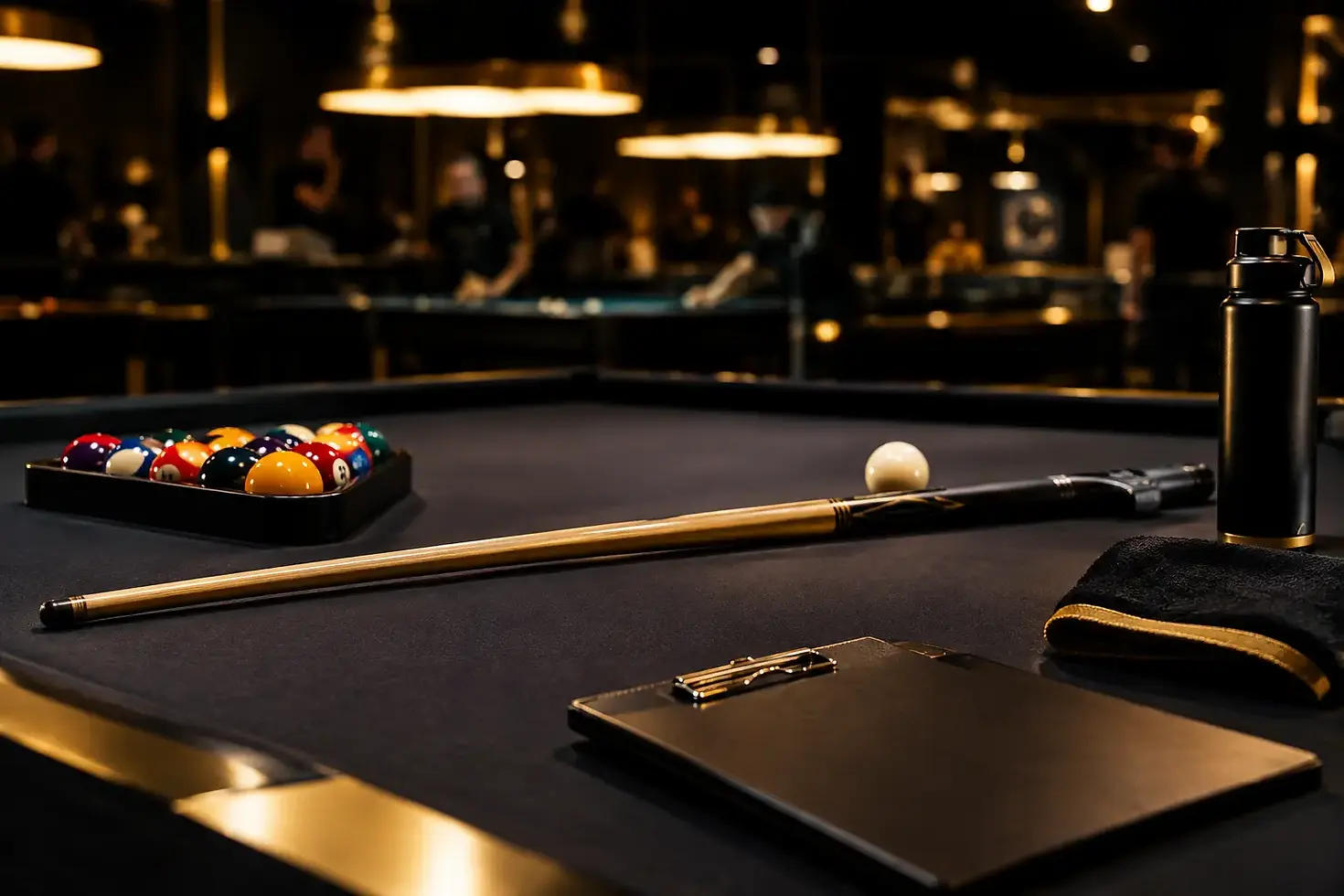
Essential Tournament Day Checklist for Pool

The difference between a good tournament day and a frustrating one is often decided before the first rack is broken. An essential tournament day checklist keeps small problems from stealing your attention: a missing cue tip tool, an empty stomach, confusion about the format, or showing up with no time to settle in. Whether this is your first local event or your fiftieth, preparation lets you spend more of the day doing what you came to do - play pool.
Check the Event Details Before You Leave
Read the tournament announcement again on the morning of the event. Confirm the start time, player meeting or registration deadline, host location, format, entry requirements, and any rating or eligibility rules. A tournament may start at noon, but registration can close well before then. Do not assume the same procedures apply at every room.
Know the game and race length, too. A race to five in 8-ball asks different things from you than a short-race 9-ball event or a one-pocket tournament. If it is a double-elimination bracket, an early loss is not the end of the day. If it is a single-elimination event, there is less room to recover from a slow start. Understanding the format helps you manage both expectations and energy.
Give yourself extra travel time. East Texas traffic, a wrong turn, a packed parking lot, or a long line at check-in can all turn a calm arrival into a rushed one. Aim to be in the room early enough to pay, greet the tournament director, use the restroom, and hit a few balls without feeling hurried.
Essential Tournament Day Checklist: What to Pack
Your cue case should support you through a full day, not just one quick set. Local tournaments can run longer than expected, especially if the field is strong, tables are limited, or matches go hill-hill. Pack what you use regularly, rather than borrowing equipment at the last minute.
Bring these basics:
Your playing cue, a backup shaft or cue if you have one, and a case that protects them.
Chalk, a tip tool, a small towel or microfiber cloth, and any joint protectors you normally use.
A bridge extension if you rely on one, plus your preferred glove if you wear one.
Photo identification, payment method, cash for food or drinks, and any required league or event information.
Water and a simple snack such as nuts, fruit, a protein bar, or crackers.
A light layer of clothing. Pool rooms can feel warm during the afternoon and cool later in the evening.
There is no need to overpack every accessory you own. The goal is to remove familiar distractions, not carry a repair shop into the room. If your cue tip is loose, badly mushroomed, or overdue for replacement, address it before tournament day. Trying a major equipment change right before a match is usually a gamble.
Dress for the Room and the Event
Wear clean, comfortable clothes that let you get down on the shot without restriction. Closed-toe shoes with stable footing are a smart choice, particularly on slick floors. Some events or leagues may have a dress expectation, so check the posted details instead of guessing.
Avoid anything that can interfere with your stroke or concentration. A heavy jacket, loose jewelry, or shoes that slide when you step into a shot can become irritating after several hours. Comfort matters, but showing respect for the host venue, tournament staff, and fellow players matters too.
Arrive Ready, Not Rushed
Once you check in, introduce yourself to the tournament director if needed and confirm where the bracket or match calls will be posted. Ask questions early, especially if you are new to the room or unfamiliar with the format. It is easier for staff to help before the first round starts than when several matches are underway.
If practice tables are available, use the time with a purpose. Start with easy stop shots, follow shots, draw shots, and a few lag attempts. Check the speed of the cloth, the rebound off the rails, and whether the pockets play generous or tight. You are not trying to prove anything in warm-up. You are gathering information.
Pay attention to conditions without turning them into excuses. A slow table may reward firmer speed and more patience. Fast cloth can magnify a loose cue-ball route. Tight pockets may call for cleaner position play and fewer low-percentage shots. Every player faces the same conditions, but the player who adjusts sooner has an advantage.
Eat, Hydrate, and Pace Yourself
Tournament focus fades quickly when you have not eaten or had enough water. Start the day with a real meal that gives you steady energy. Heavy, greasy food may sound good between matches, but it can leave you tired and unfocused during a long set. Keep snacks simple and eat before you feel completely drained.
Hydration is just as practical as any cue maintenance habit. Have water available and take small drinks throughout the day. Caffeine can help some players feel alert, but too much can make your stroke jumpy and your decision-making rushed. You know how your body responds, so avoid experimenting on the day you compete.
Use breaks wisely. Step outside for a minute, stretch your back and shoulders, or sit somewhere quiet if the room is busy. Do not spend every break replaying missed shots in your head. A missed 8-ball is information for the next rack, not a reason to carry frustration into the next match.
Build a Simple Pre-Match Routine
A consistent routine is useful because tournament nerves are normal. You do not need a complicated mental program. Give yourself a repeatable process before each match: check the score sheet or bracket, use the restroom if needed, take a drink of water, chalk your cue, and hit a few controlled warm-up shots.
Before the lag or break, decide what you want to emphasize. Maybe it is staying down on the shot, choosing safer cue-ball routes, or taking an extra second on key decisions. Pick one or two priorities. Telling yourself to play perfect pool creates pressure. Telling yourself to commit to your pre-shot routine gives you something you can actually do.
If you lose the flip or lag, do not let it change your body language. If your opponent runs a rack, stay engaged. Watch how the table is playing and be ready when your opportunity comes. In short races especially, one dry break, missed ball, or smart safety can change everything.
Know the Rules and Protect the Pace of Play
Most tournament disputes are avoidable. Before play begins, make sure both players understand the rule set being used, including break requirements, called shots where applicable, jump cue policy, push-out rules, and how fouls are handled. Do not rely only on what your regular league does. House rules and event rules can differ.
When there is a close hit, ask for a tournament official or designated referee before shooting if one is available. Do not argue a call across the table. State what you saw calmly, listen to the other player, and let the director make the decision when necessary. Protecting fair competition is part of being a good local player.
Also respect the pace of the event. Be back from breaks when your match is called. Keep your phone quiet, and do not hold up the next round because you wandered away from the tournament area. A smooth event is better for players, the host venue, and everyone waiting for a table.
Between Matches: Reset Instead of Spiral
The time between matches can either help your next set or hurt it. After a win, avoid getting careless. After a loss, avoid immediately deciding you played terribly. Write down one useful observation if that helps: missed thin cuts under pressure, over-hit position routes, or made better decisions on safeties. Then let the match go.
Watch strong players with curiosity, not comparison. Notice how they chalk, handle a difficult layout, control their pace, or respond after an error. Local events are one of the best places to learn because the lesson is happening in front of you. Ask respectful questions when the player is free, not while they are trying to compete.
PNCBA events, leagues, and local rooms bring together players at different stages of the game. Be the person who welcomes a first-time competitor, respects a tough opponent, and thanks the people running the event. Competitive pool is sharper when the community around it is strong.
When your name is called, walk to the table with your cue ready, your head clear, and one thought in mind: play the next shot well. That is all tournament day ever asks of you.


Comments